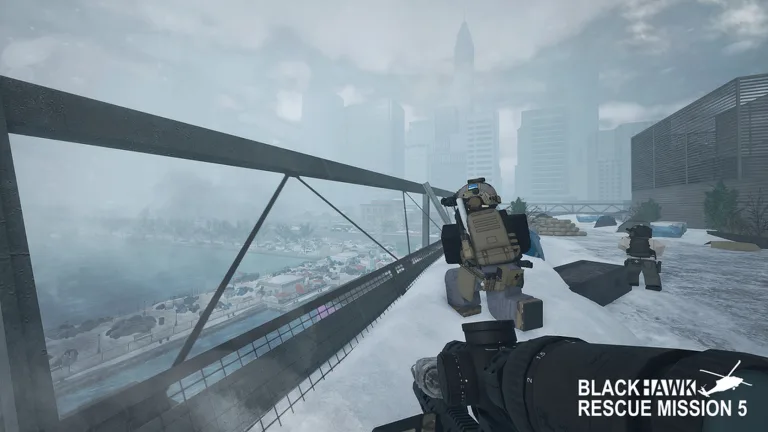
Does Body Armor Work in Blackhawk Rescue Mission 5?
Discover how blackhawk rescue mission 5 does body armor work, explore gear stats, weight limits, and master survival strategies for Roblox tactical ops.
Published: Blackhawk Rescue Mission 5 Wiki Editorial Team
Table of Contents
Understanding Tactical Loadouts and Protection
Navigating the dangerous operational zones of Blackhawk Rescue Mission 5 requires more than just good marksmanship; you need to understand your gear inside and out. Many tactical operators frequently ask whether blackhawk rescue mission 5 does body armor work when they are trying to optimize their survival odds against relentless hostile AI. While your tactical vest forms the core of your aesthetic and equipment capacity, mastering how blackhawk rescue mission 5 does body armor work involves balancing protection tiers against movement speed penalties. In high-stakes combat scenarios, being too heavy can get you killed faster than not having heavy armor at all.
According to community reports and veteran player experience, tactical equipment directly dictates your carrying capacity, stamina regeneration, and maximum movement velocity. If you load yourself down with excessive heavy gear, your response time suffers during crucial firefights. Therefore, analyzing how blackhawk rescue mission 5 does body armor work helps you craft balanced loadouts tailored specifically for stealth operations, medium-distance skirmishes, or intense bunker raids.
Equipment Component
Primary Function
Weight Impact
Recommended Use Case
Zip-On Panel Backpack
Long-range support & meds
Very Low
Sniper setups, reconnaissance
Day Patrol Backpack
General utility & ammunition
Moderate
Standard riflemen, short-medium combat
Attack Backpack
Maximum storage & heavy gear
High
Medics, machine gunners, sustained fire
Tactical Vests
Inventory slots & plate carrier
Variable
Core loadout foundation
The Mechanics of Weight and Mobility
When evaluating how blackhawk rescue mission 5 does body armor work, you must factor in total loadout weight. Player experience shows that keeping your total weight under strict limits dramatically improves your battlefield longevity. Speed often trumps raw damage absorption because dodging bullets through rapid repositioning is more reliable than soaking up hostile fire.
Stealth operatives generally aim to keep their total equipment weight under 16 kg. For general infantry operations, a weight threshold between 17 kg and 19 kg strikes an optimal balance between protection, ammunition reserves, and mobility. Exceeding these thresholds introduces severe speed penalties, making it difficult to reach maximum sprint speed before enemy AI suppresses your position.
Tip
Maintain Optimal Weight
Keep your total inventory weight between 16 kg and 19 kg to preserve your movement speed. Speed allows you to break line of sight and flank enemies far more effectively than heavy armor alone.
Choosing the Right Backpack and Vest Combinations
Your choice of backpack heavily influences your tactical mobility. Based on community insights, larger backpacks do not automatically equate to better performance because slot efficiency—the weight paid per inventory slot—decreases significantly with oversized models.
Snipers and long-range observers benefit immensely from lightweight setups like the zip-on panel backpack. Conversely, assault units engaging targets at close to medium ranges find day packs more reliable for carrying essential medical supplies and spare magazines.
Backpack Type
Slot Efficiency
Weight-to-Capacity Ratio
Ideal Playstyle
Zip-On Panel
High
Excellent
Sniper / Reconnaissance
Daypack / Patrol
Balanced
Good
Assault Rifleman
Attack Backpack
Low
Poor (Heavy)
Support / Heavy Gunner
Assess your intended mission profile (e.g., stealth recon, standard patrol, or bunker raid).
Select a vest and backpack combination that keeps your total weight below 19 kg.
Pack ammunition boxes instead of excessive raw magazines to maximize slot efficiency.
Double-check your utility slots for grenades and vital medical gear before deployment.
Ammo Management and Inventory Efficiency
Managing your inventory efficiently is just as critical as understanding vest mechanics. Carrying too many individual magazines causes heavy overweight penalties. Instead, utilizing ammo boxes allows operators to pack massive reserves while saving precious inventory slots and weight.
For standard rifle platforms, carrying three to four magazines alongside compatible ammo boxes provides more than enough firepower for standard compounds. For intense bunker incursions, adding one or two extra magazines ensures you never run dry during prolonged defensive stands.
Standard Compound Raid
Bring 3 primary magazines, compact ammo boxes, basic bandages, and a zip-on or patrol backpack to maintain high movement velocity.
Bunker Incursion
Increase your magazine count to 4 or 5, pack heavy medical supplies, and ensure your secondary weapon or vehicle storage is fully utilized.
Conclusion
Mastering loadout customization in Blackhawk Rescue Mission 5 requires looking past raw protection numbers and focusing on holistic gear efficiency. By keeping your weight within recommended limits, utilizing ammo boxes, and picking the right tactical vest combinations, you will drastically improve your survivability in the field.
Frequently Asked Questions
Does wearing heavy body armor make you slower in Blackhawk Rescue Mission 5?
Yes. Exceeding recommended weight thresholds between 16 kg and 19 kg imposes noticeable movement penalties, reducing your acceleration and maximum sprint speed during combat engagements.
How does blackhawk rescue mission 5 does body armor work with inventory weight?
Vests and tactical gear contribute to your baseline load performance. Balancing your armor choice with lightweight backpacks prevents severe mobility debuffs.
Should I carry loose magazines or ammo boxes?
Ammo boxes are far more efficient in terms of weight and slot management. Packing a few primary magazines alongside ammo boxes allows you to reload efficiently without triggering heavy overweight status.